← All Connections

Connection 01 · A trail across museum walls

Two paintings. One impossible season.

A Dutch bouquet from 1722 and a French garden from 1893 look like a simple floral pairing. Follow the records and a stranger connection appears: both painters reconstruct nature, editing time in one painting and space in the other.

Enter the mystery
First work
1722
Distance
171 years
Second work
1893
Evidence
4 museum sources

The mystery

What if neither painting shows a single moment?

One vase contains flowers that could not bloom together. One garden has been flattened to fit a room. The shared subject is only the first clue.

Take the first turn

Look before the explanation

What changes when flowers leave the vase?

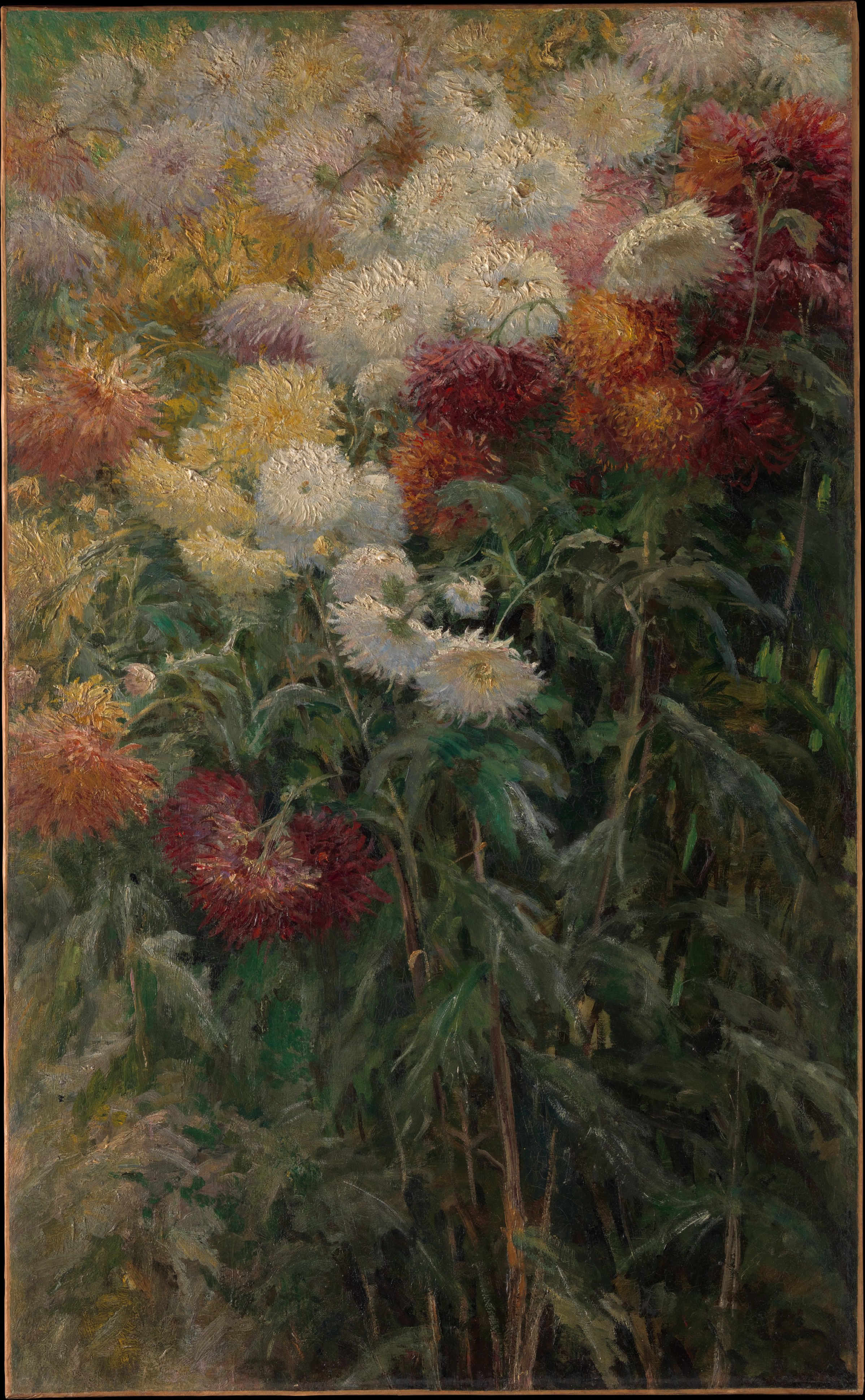
Compare the controlled abundance on the left with the cropped, horizonless garden on the right.

A dense bouquet of multicolored flowers rises from a decorated terracotta vase against a dark background.
The bouquetVase of FlowersJan van Huysum · 1722Oil on panelPublic Domain · J. Paul Getty MuseumOpen the artwork record →
A close view of tall red, white, yellow, and pink chrysanthemums filling a green garden.
The gardenChrysanthemums in the Garden at Petit-GennevilliersGustave Caillebotte · 1893Oil on canvasPublic Domain · The Metropolitan Museum of Art Open AccessOpen the artwork record →

The hinge

Time in one painting, space in the other.

The route does not depend on a shared symbol or a hidden influence. It turns on two documented acts of reconstruction: seasons assembled into one bouquet, and a cultivated garden cropped for an interior.

The first clue

Two museum titlesOne documented subject

Two titles name the same subject

What can a shared subject reveal across 171 years?

The museum records give us a modest starting point: both works are explicitly about flowers. That establishes a comparison, not a conclusion.

The shared subject: A dense bouquet of multicolored flowers rises from a decorated terracotta vase against a dark background.
The shared subjectVase of Flowers

A museum title supplies the first, deliberately modest link: flowers.

Public Domain · J. Paul Getty Museum

The clue carried forwardOne documented subject becomes the starting point for the next turn.

Check the evidence for this turnEvidence ledger

Museum record · high confidenceThe Getty record titles the panel Vase of Flowers and dates it 1722. J. Paul Getty Museum source

Museum record · high confidenceThe Met record titles the canvas Chrysanthemums in the Garden at Petit-Gennevilliers and dates it 1893. The Metropolitan Museum of Art source

Editorial inference · high confidenceThe two catalog titles support a comparison around a documented floral subject despite their different centuries and settings. J. Paul Getty Museum sourceThe Metropolitan Museum of Art source

Turn 02

One documented subjectAn impossible season

A bouquet breaks the calendar

Could all these flowers have bloomed together?

Getty explains that Van Huysum combined flowers from different seasons. The bouquet looks observed, yet no single day could have supplied it.

Calendar compressed: A dense bouquet of multicolored flowers rises from a decorated terracotta vase against a dark background.
Calendar compressedVase of Flowers

The bouquet gathers separately blooming varieties into one persuasive whole.

Public Domain · J. Paul Getty Museum

The clue carried forwardAn impossible season becomes the starting point for the next turn.

Check the evidence for this turnEvidence ledger

Museum record · high confidenceGetty describes Van Huysum combining flowers that bloom in different seasons and working from life over an extended period. J. Paul Getty Museum source

Turn 03

An impossible seasonProlonged observation

From observation to spectacle

What happens when observation is edited over time?

Getty also records that Van Huysum worked from life over an extended period. Patient study becomes a deliberately impossible abundance.

Observation accumulated: A dense bouquet of multicolored flowers rises from a decorated terracotta vase against a dark background.
Observation accumulatedVase of Flowers

Precise petals, leaves, insects, and reflections make an edited season look immediate.

Public Domain · J. Paul Getty Museum

The clue carried forwardProlonged observation becomes the starting point for the next turn.

Check the evidence for this turnEvidence ledger

Museum record · high confidenceGetty describes Van Huysum combining flowers that bloom in different seasons and working from life over an extended period. J. Paul Getty Museum source

Turn 04

Prolonged observationA close-up garden

A garden becomes an interior

Why does Caillebotte remove almost everything but flowers?

The Met identifies plants cultivated at Caillebotte's own property and an unusual close-up that lets chrysanthemums crowd out the conventional landscape.

The missing horizon: A close view of tall red, white, yellow, and pink chrysanthemums filling a green garden.
The missing horizonChrysanthemums in the Garden at Petit-Gennevilliers

The close view lets stems and blossoms occupy the field instead of opening a distant landscape.

Public Domain · The Metropolitan Museum of Art Open Access

The clue carried forwardA close-up garden becomes the starting point for the next turn.

Check the evidence for this turnEvidence ledger

Museum record · high confidenceThe Met identifies the chrysanthemums as flowers Caillebotte cultivated at Petit-Gennevilliers and describes the painting's unusual close-up view. The Metropolitan Museum of Art source

Turn 05

A close-up gardenA planned interior

From cultivated plot to painted room

Where was this horizonless garden heading?

The Met connects the painting with a decorative project for dining-room doors. A working garden is reorganized for an architectural interior.

A garden shaped for a room: A close view of tall red, white, yellow, and pink chrysanthemums filling a green garden.
A garden shaped for a roomChrysanthemums in the Garden at Petit-Gennevilliers

The vertical format matters: the museum record relates the work to a decorative scheme for doors.

Public Domain · The Metropolitan Museum of Art Open Access

The clue carried forwardA planned interior becomes the starting point for the next turn.

Check the evidence for this turnEvidence ledger

Museum record · high confidenceThe Met identifies the chrysanthemums as flowers Caillebotte cultivated at Petit-Gennevilliers and describes the painting's unusual close-up view. The Metropolitan Museum of Art source

The reveal

A planned interiorNature reconstructed

The connection is a method, not a motif

What links the works if influence does not?

Both painters restructure cultivated nature to intensify attention: one edits seasons into a bouquet, the other compresses a garden across the picture surface. This is a bounded comparison, not evidence of influence.

Time reconstructed: A dense bouquet of multicolored flowers rises from a decorated terracotta vase against a dark background.
Time reconstructedVase of Flowers

Van Huysum assembles observation made across time into one impossible display.

Public Domain · J. Paul Getty Museum
Space reconstructed: A close view of tall red, white, yellow, and pink chrysanthemums filling a green garden.
Space reconstructedChrysanthemums in the Garden at Petit-Gennevilliers

Caillebotte crops cultivated space into a tall, enveloping decorative field.

Public Domain · The Metropolitan Museum of Art Open Access

The trail arrives hereNature reconstructed

Check the evidence for this turnEvidence ledger

Editorial inference · medium confidenceSeen together, the records support a bounded comparison: one painting compresses several seasons into a single bouquet, while the other crops a cultivated garden into an immersive field. J. Paul Getty Museum sourceThe Metropolitan Museum of Art source

Continue at the source

Follow each work back to its museum.

J. Paul Getty MuseumVase of FlowersInspect the Linked Art record →The Metropolitan Museum of ArtChrysanthemums in the Garden at Petit-GennevilliersInspect the Linked Art record →

Did this story teach you something new?

Research transparency

Inspect the evidence behind the story.

The narrative is concise. The uncertainty, rejected hypothesis, machine record, and review state remain available in full.

Method, uncertainty, and rejected hypotheses

Reproducible method

  1. Selected records from two providers whose museum-supplied titles explicitly name flowers.
  2. Compared title, date, medium, and museum-authored object descriptions without inferring influence or shared symbolism.
  3. Retained each provider record as the authority for its own object metadata.

Uncertainties

  • This dossier does not establish whether the comparison is absent from existing scholarship.
  • Interpretations of floral symbolism or cross-cultural meaning require additional qualified sources and review.

Rejected hypotheses

The later work was influenced by the earlier work. The cited collection records provide no evidence of influence or a direct historical relationship.

Machine-readable connectionCultural-intelligence feedAsk about educational reuse

Assurance tier

Independent research

This Connection is an independently prepared research preview. It has not been externally reviewed and does not claim scholarly novelty, expert validation, or cleared reuse rights.

External review: Not externally reviewed.

Release control: Operator release is pending; agents cannot publish or promote this research autonomously.

External validation

Review packet prepared 2026-08-07. External approval is required before this work claims expert validation, scholarly novelty, sensitive conclusions, cleared reuse rights, or commercial licensing.

Companion stories

Keep following the method.

These are shorter source-backed stories, not additional approved Connections. Each begins with one visible or cataloged clue and shows where the evidence stops.